
Guest numbers are the easiest place to begin when working out toilet requirements for an event. One portable toilet per 50 guests is a reasonable baseline for a standard event.
East Rand Toilet Hire’s event guidance places the general range at one toilet per 20 to 50 guests, with event duration, food, and drinks among the factors that affect the final quantity. The 1:50 figure gives organisers a sensible first calculation, not a legal minimum.
An event with a large guest count or longer duration may require more toilets. The final number also depends on the sanitation facilities required.
How many portable toilets do you need?
Work with the highest number of people expected on site at one time. Remember to count employees, contractors, security personnel, and any other staff who will require toilet facilities.
Once you have that figure, allow one toilet for every 50 people. Any remainder means another toilet is required.
The figures below give a base quantity for a standard event. A venue with toilets already on site can reduce the temporary quantity if those toilets serve event guests, are in serviceable condition, and are adequate for the guest profile.
| Expected attendees | 1 per 50 | Check before hire |
| 50 | 1 toilet | Duration, drinks, toilet type |
| 100 | 2 toilets | Duration, drinks, wheelchair provision |
| 250 | 5 toilets | Peak periods, layout, service |
| 500 | 10 toilets | Distribution, service, toilet mix |
| 1,000 | 20 toilets | Multiple toilet points, service, logistics |
Round fractions upward. For example, an event for 275 people works out to 5.5 according to the 1:50 calculation, which means a base figure of six toilets, not five. Drop a fraction to the lower number, and the result falls below the baseline.
Treat the table above as a first estimate. East Rand Toilet Hire can assess the event duration, guest profile, venue, food and drink service, and toilet type before the quantity is finalised. A ratio cannot account for every event condition on its own.
How to calculate portable toilets for your event
The calculation has three parts: peak attendance, event duration, and demand factors. Each part can change the final quantity, especially when many guests visit the toilets during the same periods.
1. Confirm peak attendance
Base the calculation on the highest number of people expected on site at one time. Ticket sales across an entire day can give an inaccurate total when guests arrive and leave in separate groups. Staff, contractors, security personnel, vendors, and performers also require sanitation facilities, and the site population should reflect everyone who will rely on the temporary toilets.
2. Check the event duration
A two-hour ceremony places a different load on toilets from an event that lasts from morning until late evening. Longer events create repeat visits across the day and can place more demand on waste capacity, water supplies inside self-contained units, toilet paper, and service staff.
Multi-day events require a separate service plan. Toilet quantity and service frequency should be assessed together because extra units do not replace waste removal, replenishment, and hygiene checks over an extended period.
3. Account for food, alcohol, and peak demand
Food and drink service can increase toilet traffic, while alcohol can raise visit frequency. Breaks between speeches, matches, performances, or meal periods can also send many guests towards toilet areas at the same time.
A 250-person outdoor event gives a base figure of five toilets at 1:50. If the event lasts most of the day, serves alcohol, and has set meal periods, five is still the calculation baseline, but the final quantity should be assessed against the heavier demand profile before delivery is confirmed.
Factors that can increase the number of toilets
Two events with 500 guests can require different quantities. Guest numbers give the base figure; the event format determines if it is enough.
| Factor | Why it changes demand | Practical response |
| Peak attendance | More people share facilities at one time | Calculate from the highest site population |
| Event duration | Longer events create repeat toilet visits | Review quantity and service frequency |
| Food and alcohol | Drinks and meals can raise toilet traffic | Allow extra capacity where demand warrants it |
| Guest profile | Wheelchair users require suitable facilities | Include wheelchair-friendly toilets in the mix |
| Venue toilets | Permanent toilets can reduce temporary demand | Count only serviceable guest facilities |
| Multi-day service | Waste and supplies require scheduled attention | Plan service intervals with unit quantity |
Alcohol is not the only reason to adjust a toilet count. A large venue can create queue problems when every unit stands in one remote area.
A guest profile with wheelchair users calls for suitable facilities. A venue with dependable permanent toilets can reduce the temporary requirement, while closed, restricted, or unsuitable toilets should not be counted.
South Africa’s Safety at Sports and Recreational Events Regulations, 2017 set sanitation-related requirements for applicable stadiums and venues.
Relevant venues must provide sufficient ablutions for total capacity, subject to SANS 10400 sanitary-fixture requirements, and applicable venue certification includes water and sanitation.
The 1:50 figure provides a starting point when estimating portable toilet numbers. It should not be treated as a national legal minimum. Organisers should confirm all venue, municipal, permit, and event requirements before finalising the order.
Which types of portable toilets should you include?
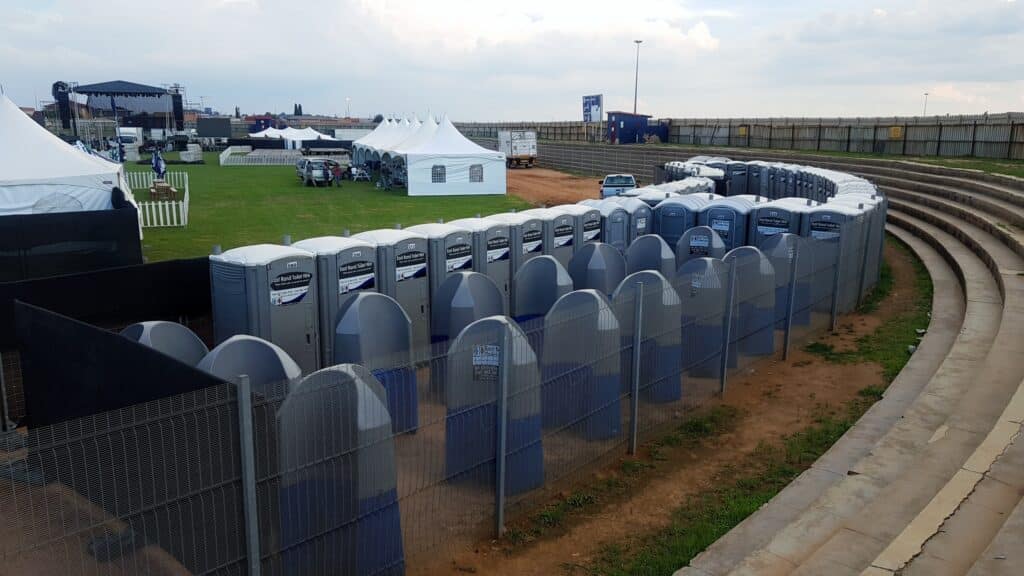
The toilet setup should match the event and the people who will be using the facilities. Some areas may only require standard portable toilets, while others may require flushing units, handwashing facilities, or VIP toilets.
Standard event portable toilets
Standard event units are suitable for festivals, community functions, sports events, school events, private functions, and other temporary sites.
Standard event toilets are not connected to the venue’s permanent sewer or water lines. East Rand Toilet Hire delivers each unit to the site, which allows toilet facilities to be provided where fixed plumbing is unavailable.
Wheelchair-friendly portable toilets
Where wheelchair-accessible toilet facilities are required, this should be planned before delivery. East Rand Toilet Hire provides wheelchair-friendly units with internal support handles.
Placement should allow a practical route to the unit, with firm ground and adequate space around the entrance.
VIP toilet trailers
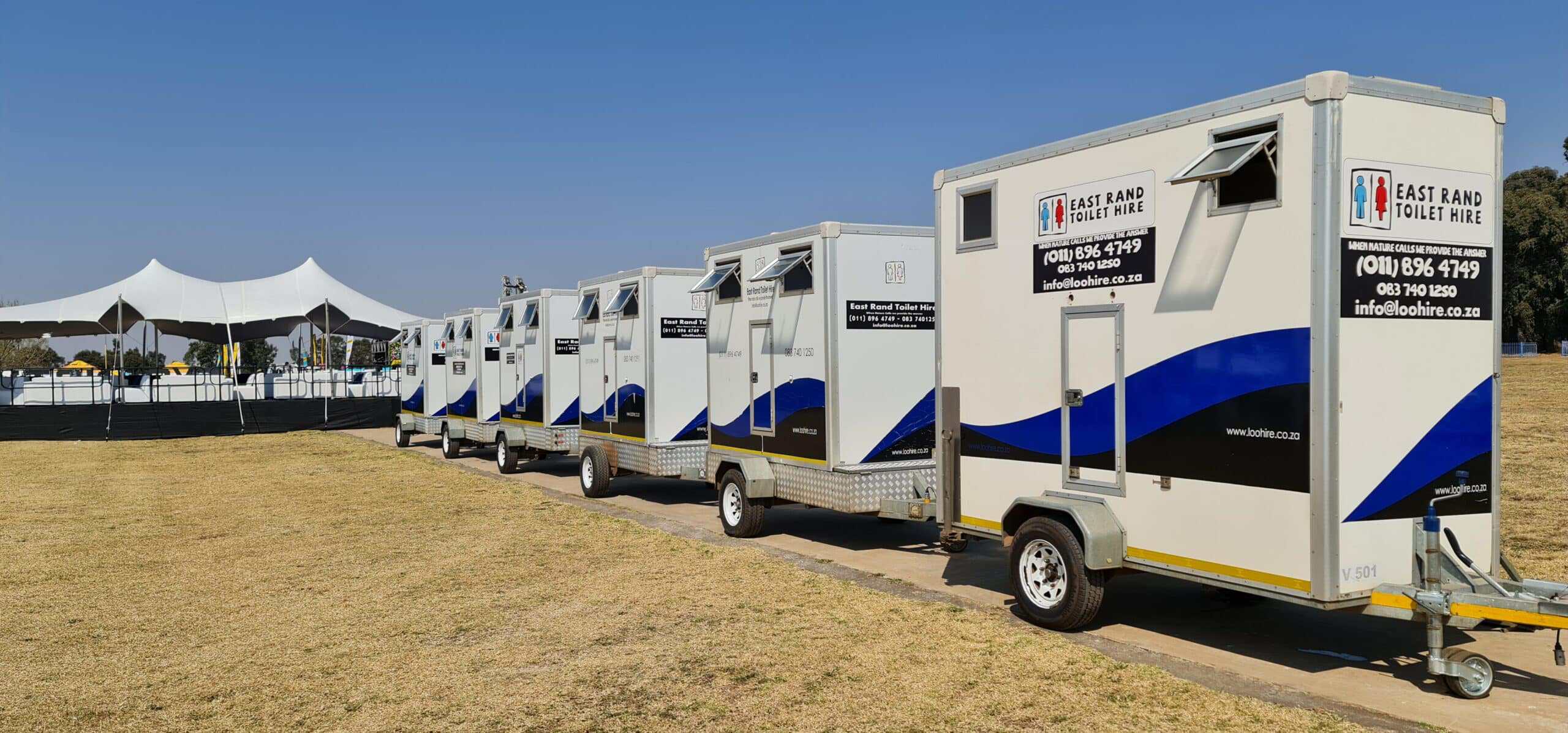
A wedding or corporate function may require more than a standard portable toilet. VIP toilet trailers provide flushing toilets, hand basins, mirrors, lighting, and separate cubicles where a more complete sanitation facility is required.
As a starting point, one East Rand Toilet Hire VIP trailer can cater for about 50 to 100 guests. The precise number of trailers you require will also depend on the length of the event and how many cubicles are available in each trailer.
A mixed sanitation plan can include standard event units for general attendance, wheelchair-friendly units for suitable provision, and a VIP trailer for a selected guest area. Quote requests should specify each category separately.
Where should portable toilets be placed at an event?
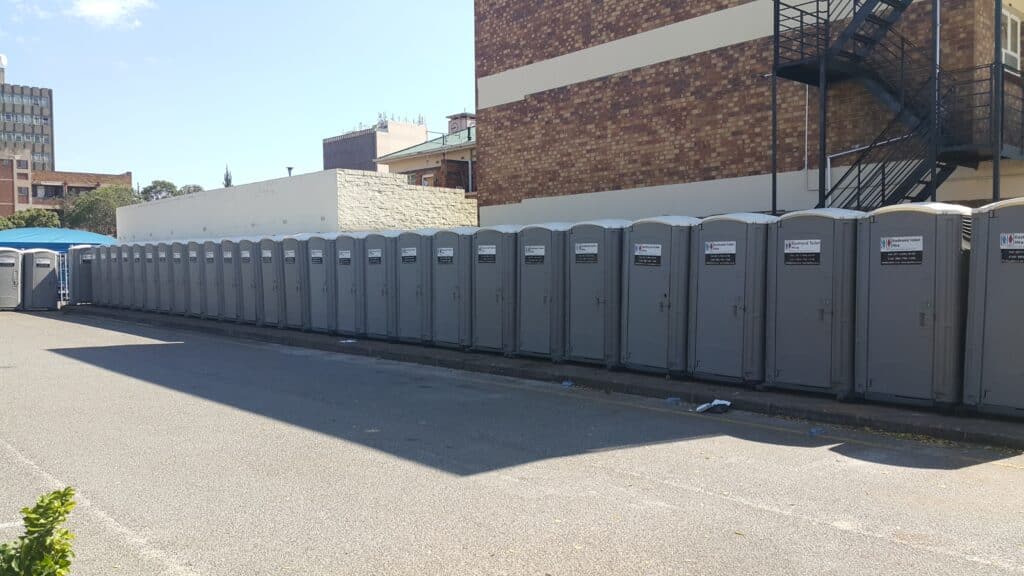
Spreading toilets through the site can prevent queues from building in one location. Each unit should also be accessible to service vehicles when it is time for cleaning or waste removal.
Toilet numbers can be theoretically adequate and still cause frustration if every unit is grouped in the wrong place.
Consider these five placement points before delivery:
- Guests should not have to search for the toilets, but placement still requires some consideration. Keep units away from food areas and out of entrances, exits, emergency routes and busy pedestrian areas.
- The ground should be firm and level, with safe walking space for guests and enough access for delivery, servicing, and collection vehicles.
- Put wheelchair-friendly units on a suitable route with enough entrance space for the person, wheelchair, and support where required.
- Split toilet groups across large venues when one distant toilet area would create long walks and concentrated queue pressure.
- Leave a practical service-vehicle route to let staff reach toilet areas with a route that avoids dense guest zones during the event.
Long events and high-attendance functions can also benefit from on-site janitors. For events that require attention to the toilets throughout the day, East Rand Toilet Hire can supply an event janitor at an additional cost.
The service includes hygiene checks, replenishing supplies, and inspecting the units during the event. Arrange servicing before the event, especially when a large number of guests will be using the toilets.
Frequently asked questions
How many portable toilets do I need for 100 guests?
A 1:50 baseline gives two portable toilets for 100 guests. Two is the first calculation, not an automatic final quantity. Event duration, alcohol, food service, wheelchair-friendly facilities, venue toilets, and peak demand can justify a different total. Confirm the event details before the hire quantity is fixed.
How many portable toilets do I need for 500 guests?
A 1:50 baseline gives 10 portable toilets for 500 guests. Large events also require attention to toilet distribution, peak queue periods, service routes, and service frequency. Ten units grouped in one remote area can create a poor guest experience despite agreement with the base calculation.
Do I require more toilets if alcohol is served?
Alcohol can increase toilet traffic, which can justify extra capacity. Guest numbers provide a starting point, but they do not give you the final toilet quantity on their own. A long event with meals and an open bar can place different pressure on the facilities than a shorter function with the same attendance. Event duration, catering, bar hours, and busy periods should therefore form part of the calculation.
Should an event include a wheelchair-friendly portable toilet?
Wheelchair-friendly portable toilets should form part of the event setup where the venue brief or guest requirements call for accessible sanitation. Quantity is not the only concern. The route, ground surface, entrance area, and placement should allow practical movement to and from the unit.
Can venue toilets reduce the number of portable toilets required?
Yes. Permanent venue toilets can reduce the temporary quantity when the facilities are open to event guests, serviceable, adequate for the expected attendance, and appropriate for the guest profile. Toilets reserved for staff, closed facilities, or units outside practical reach should not reduce the temporary calculation.
Plan the right toilet setup for your Gauteng event
One portable toilet per 50 guests gives a practical first figure, but the final sanitation plan should reflect attendance, duration, food and alcohol, wheelchair-friendly provision, venue facilities, layout, and service arrangements.
A well-calculated quantity supports hygiene, sensible queue times, and reliable event operations.
East Rand Toilet Hire has supplied portable sanitation across Gauteng since 1994. Send the event date, venue location, peak attendance, event duration, food and alcohol details, and preferred toilet types when you request a quote.
The team can assess the information and recommend a practical event toilet setup for the site.